
Joseph El-Gebeily in Washington to Present the Lebanese Forces’ Vision for Lebanon’s Future
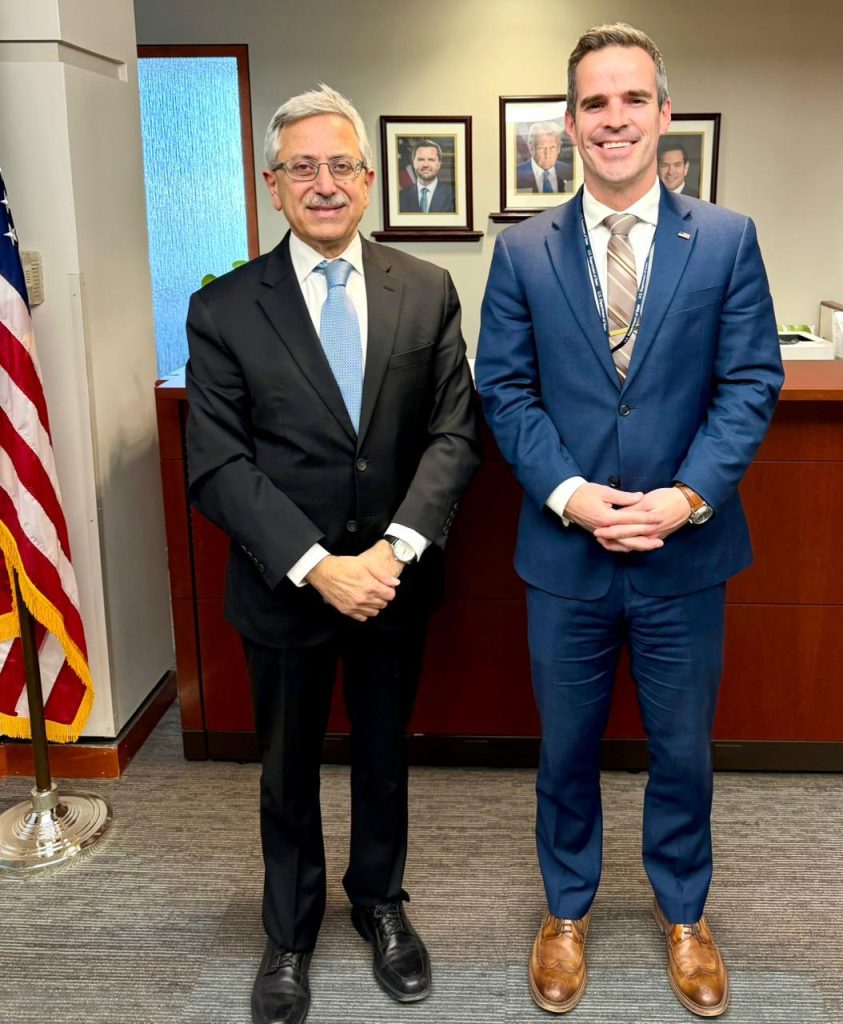
Lebanese Forces Executive Body member Dr. Joseph El-Gebeily conducted a working visit to the American capital, Washington, during which he held a series of meetings with officials in the U.S. administration, members of Congress, and researchers at think tanks, in addition to meetings with representatives of the Lebanese diaspora and Lebanese-American organizations, as part of presenting the sovereignty forces’ approach to Lebanon’s future and the current political and economic developments.
Dr. Gebeily’s meetings at the White House included sessions with the Office of the Vice President, the Middle East desk at the National Security Council, and the Counterterrorism Office, in addition to the U.S. State Department and its Middle East Bureau, and the Treasury Department — particularly with officials handling counterterrorism and illicit finance files — alongside meetings with members and advisors in both the Senate and the House of Representatives, especially the Foreign Affairs Committees and the Lebanese-American Friendship Caucus in Congress.
In these meetings, Dr. Gebeily addressed a number of key issues, most notably the restoration of full Lebanese sovereignty and the restriction of weapons to the state, support for state institutions — particularly the Lebanese Army — and the strengthening of its capabilities, emphasis on holding parliamentary elections on schedule with freedom and transparency, and guaranteeing the right of expatriate Lebanese to vote for all 128 members of parliament from their countries of residence, in addition to discussing the bill proposed in Congress related to holding accountable those who obstruct this democratic process.
During these meetings, Dr. Gebeily presented a vision for financial, banking, and public budget reforms based on correcting the existing imbalance, protecting depositors’ rights in a fair and practical manner, halting illegitimate financial operations and institutions, and relaunching the economy through transparent institutions free from corruption and waste.
The meetings also touched on regional developments and their repercussions on Lebanon, international efforts related to de-escalation and peace tracks in the region, and the need to confront interference that obstructs Lebanon’s stability and the establishment of a state of institutions.
Dr. El-Gebeily also delivered a lecture at the Council on Foreign Relations and held meetings with researchers and experts at think tanks, most notably the Washington Institute for Near East Policy, in addition to meetings with Lebanese-American organizations and members of the Lebanese diaspora, the Lebanese Information Center, and the Lebanese Embassy in Washington.
Dr. Gebeily also participated in a meeting at the Lebanese Forces center in Washington, D.C., in the presence of Washington center head Nada El-Haddad and a gathering of party members who listened to his remarks on the latest developments in the Lebanese situation and the Lebanese Forces party’s position on them.